

At a non-union, white-collar healthcare company with 1,500 employees, carrier invoices were not routinely audited against the benefit system. To reduce costs wherever possible, the company hired a new CFO. Based on our past professional relationship with the CFO, we were asked to make recommendations. At the time, HR was very protective of incumbent brokers, and the head of benefits confirmed that their broker audits invoices monthly.
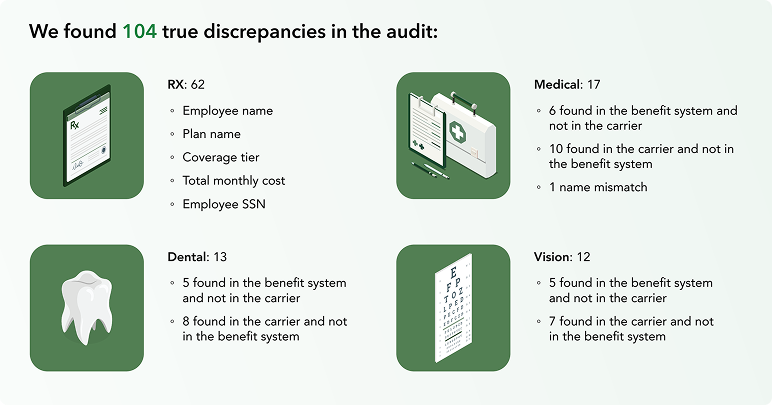
The account spanned four lines of coverage — medical, RX, dental, and vision — and the plan names never lined up: 31 plan names across the carrier files against 20 in the benefit system.


We deployed our Benefit Automated Reconciliation Tool (BART) to audit the carrier files against the benefit system. Four steps came first.
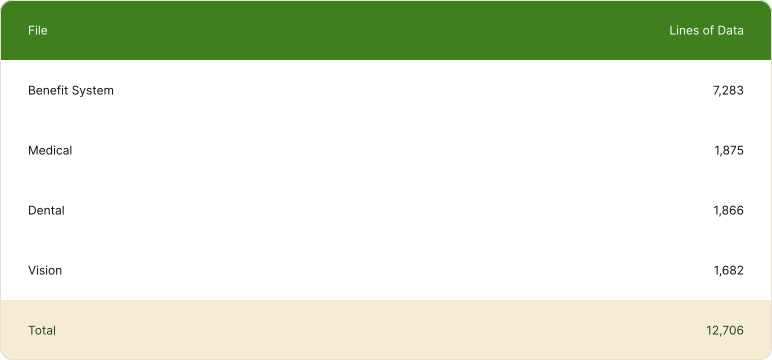

Rather than running a manual audit line of coverage by line of coverage, BART consumed all four files and produced one reconciliation report covering every line. That makes it far easier to work the rec and resolve every discrepancy on a single audit report.
BART runs a quintuple wash — employee name, plan name, coverage tier, total monthly cost, and employee SSN — flagging cost mismatches, coverage mismatches, name mismatches, records found in the benefit system but not the carrier, and records found in the carrier but not the benefit system.